
The United Arab Emirates has joined the Pax Silica Declaration, positioning itself within a growing international coalition focused on economic security and technology collaboration in the age of artificial intelligence. From the UAE’s standpoint, the move reflects a strategic effort to align its national priorities in advanced technology, energy, and investment with like-minded partners.
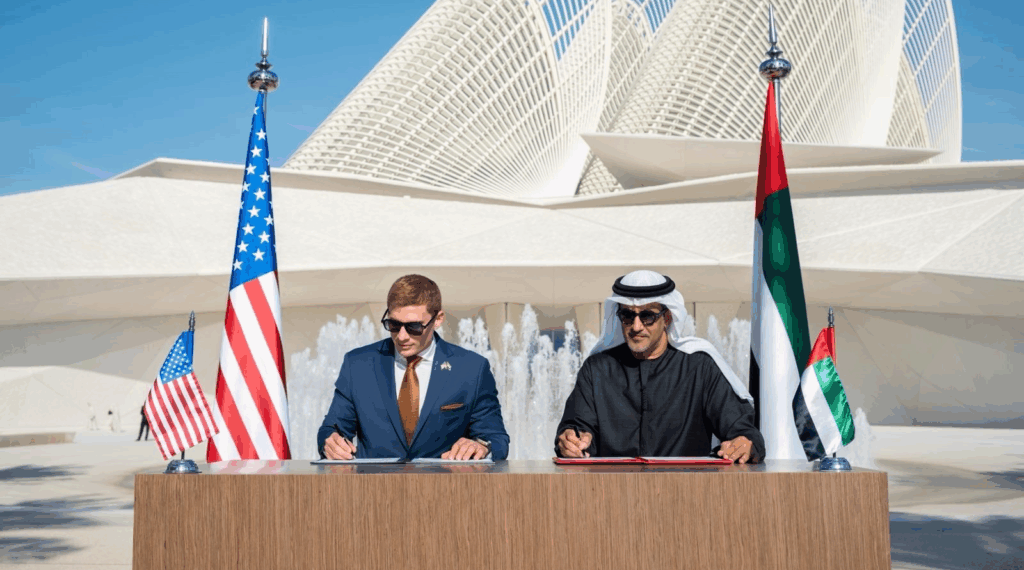
The UAE’s accession was formalized through the signing of the declaration by Minister of State Saeed Bin Mubarak Al Hajeri and U.S. Under Secretary of State for Economic Affairs Jacob Helberg. The agreement underscores the UAE’s intent to participate in multilayered partnerships aimed at strengthening global supply chain security, reducing vulnerabilities linked to single points of failure, and addressing coercive dependencies in critical technology sectors.
UAE officials have highlighted the country’s established role in energy markets, global investment, and emerging technologies as central to its participation in Pax Silica. The declaration aligns with the UAE’s broader economic diversification strategy, which places increasing emphasis on building a secure, scalable, and trusted artificial intelligence ecosystem to support long-term growth.
Under the framework, the UAE and its partners will explore collaboration across key segments of the global technology stack. These include next-generation connectivity and edge infrastructure such as 6G, compute and data center development, advanced manufacturing, logistics, mineral refining and processing, and energy systems. The areas of cooperation reflect sectors where the UAE has made sustained investments and seeks to expand its technological and industrial capabilities.
Pax Silica is described by participating governments as an economic security coalition designed for the AI era, and represents the first coordinated effort to organize international cooperation around compute, silicon, critical minerals, and energy as shared strategic assets. With the UAE’s entry, the coalition now includes Australia, Israel, Japan, the Republic of Korea, Qatar, Singapore, and the United Kingdom. India is expected to join as a signatory next month.