

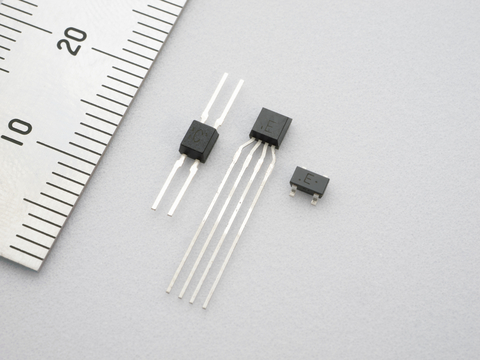
Asahi Kasei Microdevices Corporation (AKM) has announced that its commercialization of thin-film Hall elements, first launched in 1983, has been formally recognized as an IEEE Milestone by the Institute of Electrical and Electronics Engineers (IEEE). The IEEE Milestone program honors historic achievements in electrical and electronic engineering that have delivered lasting impact to society and industry, with eligibility requiring at least 25 years since the original development.
The recognition marks more than four decades since AKM introduced its HW Series, which enabled the successful mass production of magnetic sensors based on thin-film Hall elements. At the time, the commercialization represented a significant step forward in magnetic sensing technology and laid the groundwork for its widespread integration into consumer and industrial electronics. Today, thin-film Hall elements are regarded as a standard magnetic-sensing solution across a broad spectrum of electronic devices worldwide.
In the early stages of development, thin-film Hall elements faced technical limitations, including insufficient sensitivity and reliability challenges, particularly related to thermal stability. To address these issues, AKM engineered a structure that positioned a thin-film indium antimonide (InSb) layer between two ferrite layers, concentrating magnetic flux and significantly improving detection sensitivity. The company further introduced a three-layer electrode structure compatible with gold wire bonding, enhancing both thermal stability and production durability.
These innovations enabled large-scale industrialization. According to the company, more than 50 billion Hall sensor units based on this technology have been shipped globally since commercialization began.
Over the years, AKM’s Hall elements have been widely deployed in brushless motors, including cooling fans used in personal computers and servers. Their adoption has supported the miniaturization of information technology infrastructure and consumer electronics. In addition, the sensors have contributed to improved energy efficiency in heating, ventilation, air conditioning, and refrigeration systems.
AKM continues to expand the application scope of magnetic sensing technologies into precision position detection and current sensing. These developments have supported enhancements in smartphone camera performance and improved efficiency and driving range in electric vehicles. The technological foundation established through the Hall element program has also been extended to other device categories, including infrared sensors and LEDs.
Satoshi Takehara, Executive Officer of Asahi Kasei Microdevices, expressed appreciation to customers, suppliers, and stakeholders for their support over decades of production, noting that the IEEE Milestone recognition reinforces the company’s commitment to quality, reliability, and ongoing technological advancement.