

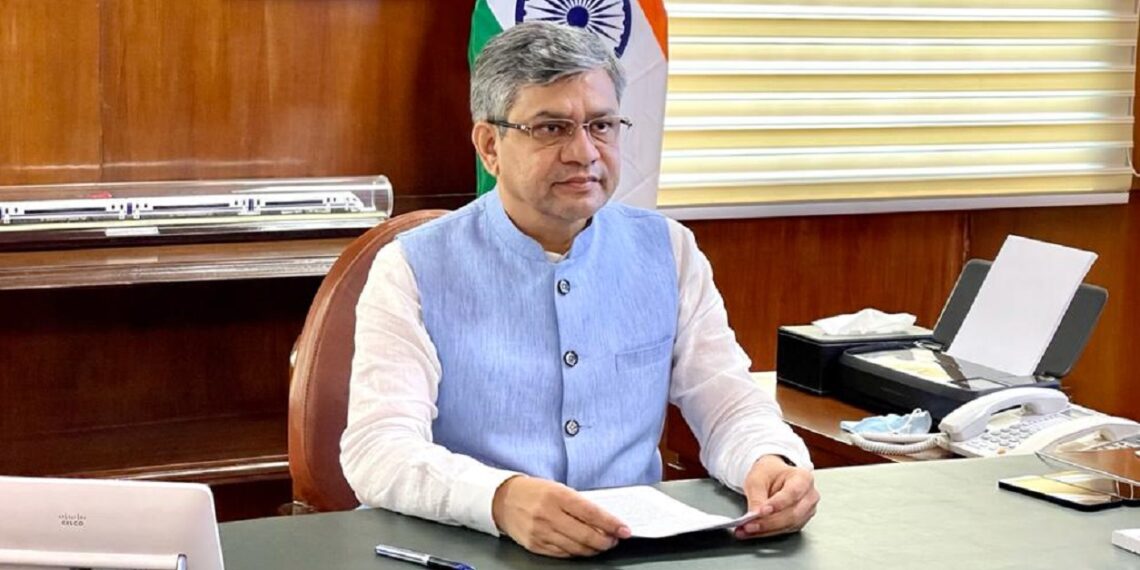
India is intensifying its efforts to build a domestic semiconductor ecosystem, with Ashwini Vaishnaw announcing that the country’s first full-scale semiconductor fabrication plant (fab) is expected to be operational by 2028. The timeline forms a critical part of the government’s broader strategy to position India as a key player in the global semiconductor value chain.
Speaking at a semiconductor facility inauguration in Sanand on March 31, 2026, Vaishnaw said that four semiconductor plants are set to become operational by the end of the year, reflecting the pace of execution under the India Semiconductor Mission. He described the progress as a “day of pride,” pointing to the rapid transformation of India’s manufacturing landscape.
The announcement coincided with the inauguration of a ₹3,300 crore OSAT facility by Narendra Modi. Developed by Kaynes Semicon, the plant represents India’s second operational semiconductor unit and is expected to produce up to 6 million chips per day. The output will cater to sectors such as electric vehicles, telecom infrastructure, and consumer electronics, with initial shipments already reaching international customers.
India’s semiconductor roadmap includes a mix of fabrication, assembly, and testing facilities aimed at building a complete supply chain. A key project is the ₹91,000 crore fab being developed by Tata Electronics in Dholera Special Investment Region. The facility is projected to produce up to 50,000 wafers per month, targeting advanced semiconductor nodes for applications across automotive, display, and electronics sectors. Trial production is expected to begin by mid-2027, with full-scale operations planned the following year.
Meanwhile, Micron Technology has established a strong foothold in Sanand, with its facilities achieving commercial production within approximately 14 months from inception—an accelerated timeline compared to global benchmarks. The company’s presence has played a pivotal role in catalyzing the region’s emergence as a semiconductor hub.
To date, the government has approved 10 semiconductor projects with a combined investment of ₹1.6 lakh crore. These projects span multiple states, including Gujarat and Assam, and are expected to create an integrated ecosystem covering chip design, manufacturing, and packaging.
Officials also highlighted workforce development as a priority, with plans to train nearly 60,000 engineers to support the sector’s growth. Early progress includes the development of indigenous chips, such as a 32-bit processor showcased at industry events.
Sanand, once an automotive manufacturing center, is now evolving into a semiconductor cluster with multiple facilities under development. The region’s rapid industrial transformation reflects India’s broader ambition to become a top-five semiconductor player globally by 2028.