

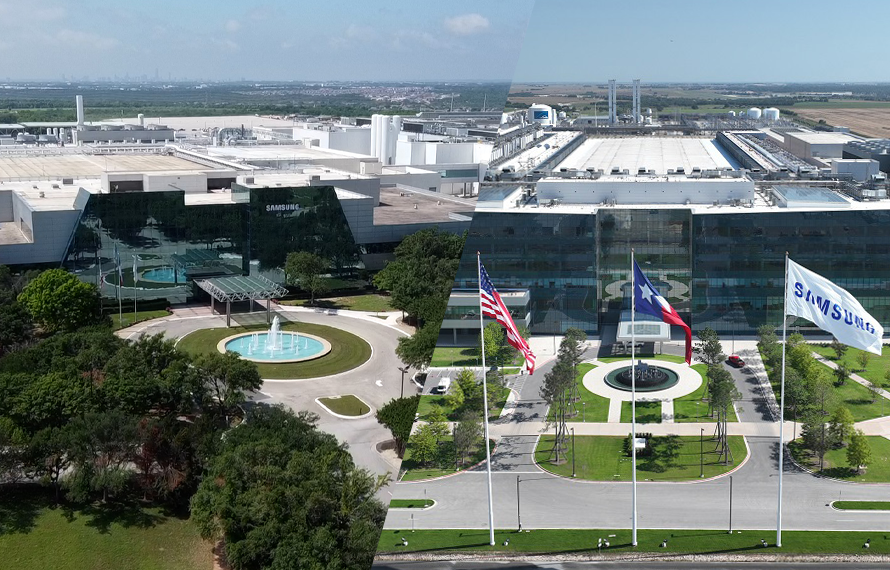
Samsung Electronics (KRX: 005930) said its Austin and Taylor semiconductor campuses contributed $10.9 billion to the Central Texas economy in 2025, supporting 28,746 jobs and generating $2 billion in worker salaries, according to an economic impact report released by its U.S. semiconductor operations.
The report, published by Samsung Austin Semiconductor on October 15, 2026, assesses the economic contributions of its operating semiconductor fabrication facilities in Austin and construction activity at its developing manufacturing campus in Taylor, Texas. Samsung said the two sites also generated $218.2 million in annual revenue for local taxing districts.
The findings highlight the regional economic footprint of Samsung’s semiconductor operations as the South Korean technology company prepares to expand its U.S. manufacturing capacity. The Taylor campus is a key part of that expansion, with Samsung targeting advanced chip production at the site.
The economic figures are based on a third-party analysis commissioned for the company. They include contributions from direct operations, construction, employment, suppliers and related economic activity.
Construction and Operations Support Regional Jobs
Samsung Austin Semiconductor reported that its Austin and Taylor activities supported 4,492 direct jobs and nearly 9,000 indirect jobs. Construction activity at the Taylor campus accounted for an additional 14,264 direct and indirect jobs, according to the report.
The two campuses generated $2 billion in worker salaries during 2025. Samsung said these jobs support the region’s skilled workforce and contribute to the wider economy through household spending and demand for local services.
The company also reported $1.9 billion in payments to vendors associated with the Austin campus, while payments linked to the Taylor campus totaled $7.4 million. These expenditures contribute to the supplier network supporting semiconductor manufacturing and facility construction.
Samsung’s reported economic contribution was lower than the $19.8 billion attributed to its two campuses in 2024, when the company said they supported 38,498 jobs and generated $2.6 billion in worker salaries. The reports cover different annual periods, and the figures reflect activity across both manufacturing operations and construction. The company’s latest announcement did not provide a detailed explanation for the year-over-year decline.
Taylor Campus Advances U.S. Manufacturing Plans
Samsung has operated semiconductor manufacturing facilities in Austin since 1996. The company says it has invested more than $18 billion in operating two fabrication plants at the site.
Construction of the Taylor manufacturing campus began in 2022. During 2025, the project progressed while the company began campus operations in the fourth quarter, including opening an office building used by hundreds of employees.
Samsung aims to establish advanced manufacturing operations at Taylor using extreme ultraviolet (EUV) lithography to produce 2-nanometer chips in the United States. The company has said it expects the facility to become operational by the end of 2026.
The broader expansion forms part of Samsung’s plans to invest more than $37 billion in the region in the coming years. The U.S. government has also outlined federal support for Samsung’s Texas semiconductor operations under the CHIPS and Science Act.
The scale and timing of future economic contributions will depend on the facility’s construction progress, manufacturing ramp-up, hiring and supplier activity.
Workforce Development and Community Investment
Alongside manufacturing and construction, Samsung reported investments in local communities and workforce development. The company contributed nearly $4 million to community organizations in Austin, Manor, Taylor, Travis County and Williamson County during 2025.
It also invested $5.9 million in workforce development initiatives, including partnerships with the University of Texas at Austin, Austin Community College and Texas A&M University.
These programs support efforts to develop the technical skills required for semiconductor manufacturing and related industries. As production capacity expands, workforce availability and training will remain important considerations for the region’s semiconductor ecosystem.