

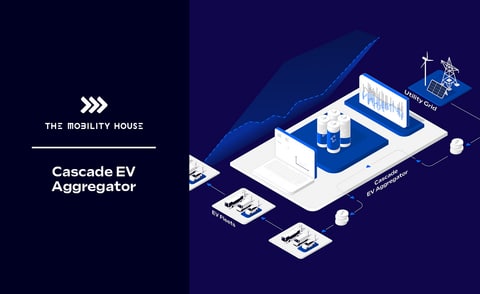
The Mobility House North America has launched Cascade EV Aggregator, a vehicle-grid integration platform designed to help electric utilities manage the growing impact of electric vehicle charging on power grids. The company said the platform is intended to provide large-scale optimization of both EV charging and discharging across a wide range of vehicle and charger types, from residential chargers to large electric school bus fleets.
According to The Mobility House North America, Cascade is positioned as one of the most versatile EV load aggregation tools available in the region. The platform enables utilities and fleet operators to coordinate charging behavior across thousands of sites, helping to balance grid demand while maintaining vehicle availability for daily operations.
The launch comes as utilities face rapid load growth driven by increasing EV adoption and expanding energy-intensive infrastructure such as data centers. A recent BloombergNEF forecast estimates that electric vehicle battery capacity on U.S. roads could reach 4 terawatt-hours within the next decade. If aggregated and actively managed, this capacity could become the largest distributed energy resource in the country. Without coordination, however, it could place significant strain on existing grid infrastructure.
“Electric vehicle batteries can play a substantial role in meeting the tremendous challenge of load growth on the electrical grid,” said Greg Hintler, Chief Executive Officer of The Mobility House North America. He added that the company’s focus is on harmonizing EV charging with reliable grid operations.
Cascade is designed to operate alongside existing charge management systems rather than replace them. While systems such as The Mobility House’s ChargePilot manage charging optimization at individual fleet sites, Cascade aggregates flexibility across multiple systems and locations to support distribution grid needs. The platform can receive real-time signals from utilities or energy markets and translate them into optimized charging and discharging plans tailored to both grid conditions and vehicle mobility requirements.
A notable application of the platform is in electric school bus fleets, particularly in California, Massachusetts, and New York, where vehicle-to-grid (V2G) programs are gaining traction. Through bidirectional charging, buses can export energy back to the grid when parked, creating a potential new revenue stream for fleet operators.
“The electric school buses in our fleet work hard every day to get students to school safely,” said Ernest Epley, Transportation Director at Fremont Unified School District. “As part of The Mobility House’s Cascade Aggregator, they can now earn revenue for the district by supporting the energy grid while they are parked.”
The platform supports both unidirectional smart charging and bidirectional V2G operation, enabling services such as demand response, dynamic rate optimization, and grid constraint management. According to Russell Vare, Vice President of Vehicle-Grid Integration at The Mobility House North America, Cascade provides a critical aggregation layer that allows EVs to participate in virtual power plants, delivering grid flexibility at scale.