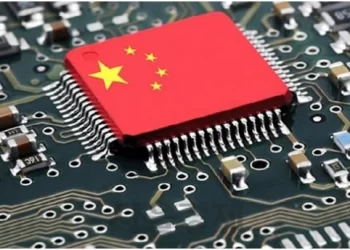



Congressman Michael Baumgartner has introduced a bipartisan bill aimed at tightening export controls on sensitive semiconductor manufacturing equipment (SME). The proposed legislation, called the MATCH Act, seeks to close critical gaps in current U.S. export control frameworks and strengthen coordination with allied nations.
The bill comes amid growing concerns over China’s rapid progress in semiconductor manufacturing. Backed by strong state support, Chinese firms have expanded their capabilities across both legacy and advanced chip production. Lawmakers warn that this growth poses risks to U.S. national security and supply chain resilience.
Baumgartner said the United States must act urgently to prevent strategic technology leakage. “China has made it abundantly clear that it intends to dominate the technologies that underpin both our economy and our national defense,” he stated. “The United States cannot afford to leave open back doors that allow the Chinese Communist Party to acquire the tools it needs to leap ahead in semiconductor manufacturing.”
The MATCH Act has drawn bipartisan backing in the House. Key supporters include John Moolenaar, Rich McCormick, and Bill Huizenga. Companion legislation has also been introduced in the Senate by Pete Ricketts and Andy Kim, highlighting broad political support.
At the center of the bill is a push to align U.S. export controls with those of allies. Lawmakers argue that current misalignment allows Chinese companies to access advanced chipmaking tools through indirect channels. These loopholes, they say, weaken the impact of U.S. restrictions.
“The bipartisan MATCH Act will close loopholes and create a level playing field,” said Moolenaar. “China exploited gaps in export controls to acquire chip-making equipment as part of its strategy to dominate in chips. There is an urgent need to act.”
The legislation proposes a country-wide prohibition on exporting key “chokepoint” semiconductor tools to nations of concern. These include deep ultraviolet (DUV) immersion lithography systems and cryogenic etch equipment, which are essential for both advanced and legacy chip production.
The bill also places tighter restrictions on major Chinese semiconductor players. Facilities operated by companies such as Huawei, Semiconductor Manufacturing International Corporation, and Yangtze Memory Technologies Corporation would face restrictions similar to those under the U.S. Entity List. These controls would limit exports, servicing, and technical support.
Senator Ricketts emphasized the strategic importance of semiconductor manufacturing equipment. “The ability to design and produce semiconductors lies at the heart of the technology competition with Communist China,” he said. “For too long, our export controls have been a patchwork that Beijing easily bypasses.”
The MATCH Act also introduces a diplomatic framework to push allies toward alignment. It sets a 150-day deadline for partner nations to adopt similar controls. If progress is not made, the U.S. Department of Commerce would be directed to implement unilateral measures.
In addition, the bill expands the Foreign Direct Product Rule. This would extend U.S. jurisdiction over foreign-made products that use American technology, software, or components. Lawmakers say this step is critical to closing indirect supply routes.
Supporters argue that the legislation will also benefit U.S. industry. “By aligning export controls, we strengthen our industrial base,” said McCormick. “We ensure that semiconductor growth and jobs remain in the United States and among trusted partners.”
Concerns over China’s access to chipmaking tools are not new. However, policymakers say enforcement gaps have allowed continued procurement. Bill Huizenga noted that access to such tools could support military modernization. “China is exploiting access to American and allied chipmaking equipment to pursue global AI dominance,” he said.
Industry experts and policy analysts have broadly supported the bill. Researchers at the Center for Security and Emerging Technology said aligning export controls is key to maintaining technological advantages. Similar views were echoed by the Council on Foreign Relations, which highlighted the importance of restricting access to advanced semiconductor tools.
Experts argue that semiconductor manufacturing equipment is one of the few areas where the U.S. and its allies maintain a clear advantage. Advanced AI chips cannot be produced without these tools. However, uneven restrictions have enabled continued access by Chinese firms.
Lawmakers also pointed to broader economic and security implications. Mike Lawler said, “China is moving aggressively to dominate the semiconductor supply chain, and we must work alongside our allies to coordinate our export controls.”
The MATCH Act also emphasizes fairness for American companies. Current policies, some lawmakers argue, place U.S. firms at a disadvantage when foreign competitors operate under less stringent rules. The bill aims to address this imbalance through coordinated global controls.
Beyond national security, the legislation reflects growing urgency around technological leadership. Semiconductor manufacturing remains central to advancements in artificial intelligence, defense systems, and digital infrastructure.
Baumgartner framed the bill as a long-term strategic measure. “This is about protecting American workers, American innovation, and American security for the long haul,” he said.
As the global semiconductor race intensifies, the MATCH Act signals a more coordinated and assertive U.S. approach. Its success, however, will depend heavily on cooperation from allied nations and effective enforcement of new rules.
The bill is expected to move through legislative review in the coming months. Industry stakeholders and international partners will be closely watching its progress and potential impact on the global semiconductor supply chain.