

Market Summary:-
According to our research intelo, the global AI in Neuromorphic Chips market size is valued at USD 1.58 billion in 2024, demonstrating significant momentum in the adoption of neuromorphic technologies across industries. The market is expected to grow at a robust CAGR of 43.2% during the forecast period, reaching USD 23.84 billion by 2033. This exponential growth is driven by the increasing demand for energy-efficient and intelligent computing solutions, particularly in applications such as edge computing, robotics, and advanced image recognition. As organizations seek to overcome the limitations of traditional AI hardware, neuromorphic chips are emerging as a transformative technology, offering unparalleled speed and efficiency for AI workloads.
A New Intelligence Era Is Being Born
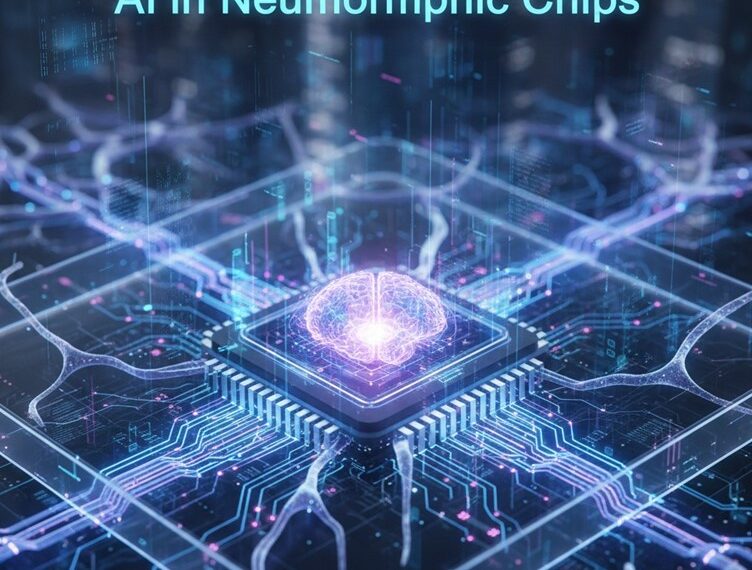
Artificial Intelligence has learned to see, hear, predict, and decide. Yet, despite its power, today’s AI still thinks very differently from the human brain. Enter neuromorphic chips—a revolutionary technology that does not just process data, but learns, adapts, and reacts like biological neurons.
The AI in Neuromorphic Chips Market is not just another semiconductor trend. It is the foundation of next-generation intelligence, and nations like India, the USA, and China are racing to lead this silent revolution.
What Makes Neuromorphic Chips Different from Conventional AI Hardware?
Traditional AI chips rely on clock-driven computation and massive energy consumption. Neuromorphic chips, however, are inspired by spiking neural networks (SNNs)—the same mechanism used by the human brain.
Core Distinctions That Change Everything
- Event-based processing instead of continuous computation
- Ultra-low power consumption, ideal for edge AI
- Parallel learning, not sequential instructions
- Real-time adaptation rather than static model execution
In simple terms, neuromorphic chips don’t wait to be told what to do—they respond only when something meaningful happens.
Why AI Needs Neuromorphic Chips Now More Than Ever
As AI models grow larger, data centers grow hotter, costlier, and less sustainable. Neuromorphic AI solves a critical future challenge: intelligence without energy overload.
The Problem Traditional AI Cannot Fix
- High latency in real-time applications
- Energy-hungry GPUs and TPUs
- Cloud dependency for intelligence
- Limited adaptability in unpredictable environments
Neuromorphic AI flips the equation by bringing thinking directly to devices, not servers.
India’s Strategic Position in the Neuromorphic AI Landscape
India stands at a unique crossroads—rich in AI talent, rapidly growing electronics manufacturing, and backed by national initiatives like Make in India and Semicon India.
Why India Is More Than Just a Participant
- Strong ecosystem of AI researchers and startups
- Rising demand for edge AI in smart cities, healthcare, and defense
- Cost-efficient chip design capabilities
- Increasing government focus on deep-tech self-reliance
India is not trying to copy the USA or outpace China blindly. Instead, it is positioning itself as a frugal innovator, building neuromorphic solutions that are scalable, affordable, and locally relevant.
USA vs China: The Global Neuromorphic Chessboard
The neuromorphic chips market has quietly become a geopolitical technology battlefield.
The USA’s Approach: Research-Driven Dominance
- Heavy investment in brain-inspired computing
- Strong university-industry collaboration
- Focus on defense, robotics, and autonomous systems
- Emphasis on intellectual property leadership
China’s Strategy: Scale and Speed
- Aggressive state-backed funding
- Rapid commercialization of AI hardware
- Integration into surveillance, smart infrastructure, and automation
- Focus on manufacturing dominance
Between these two giants, India’s neutral yet innovative stance could become a strategic advantage.
Key Application Areas Redefining the Market
Neuromorphic AI is not science fiction—it is already reshaping industries.
- Edge Intelligence & IoT
Smart sensors that detect patterns instantly without cloud processing. Ideal for India’s vast infrastructure and connectivity challenges.
- Autonomous Systems
From drones to self-navigating robots, neuromorphic chips enable faster reflexes and lower power usage.
- Healthcare & Brain-Machine Interfaces
Real-time neurological signal processing opens new doors for diagnostics, prosthetics, and mental health monitoring.
- Cybersecurity & Anomaly Detection
Neuromorphic AI can identify abnormal behavior patterns instantly, even in unseen attack scenarios.
Why This Market Is Still Wide Open
Unlike GPUs or CPUs, neuromorphic chips are not yet monopolized. The market is still forming, standards are evolving, and architectures are being defined.
This Creates Rare Opportunities
- New chip architectures can still emerge
- Startups can compete with global giants
- Countries can influence future standards
- Talent matters more than legacy dominance
For India, this is not a late entry—it is a timely arrival.
Challenges That Will Shape the Winners
While promising, neuromorphic AI faces real hurdles.
- Limited software ecosystems for spiking neural networks
- Lack of standardized development frameworks
- Need for specialized talent and education
- Integration challenges with existing AI pipelines
The countries and companies that solve usability, not just hardware, will lead the market.
How Neuromorphic AI Helps Future Generations
This technology goes beyond profit—it supports a sustainable intelligence future.
- Lower carbon footprint of AI systems
- Decentralized intelligence, reducing data misuse
- Smarter assistive technologies for education and healthcare
- Democratization of AI beyond large data centers
Future generations will inherit AI that is efficient, ethical, and adaptive, not just powerful.
The Silent Race That Will Define the Next Decade
AI in neuromorphic chips is not loud like generative AI—but it is far more foundational. The nation that masters brain-inspired intelligence will influence defense, healthcare, infrastructure, and digital sovereignty.
India has the talent.
The USA has the research depth.
China has the scale.
The market will reward those who combine all three.
Future Outlook: Intelligence Is Evolving—Are We Ready?
According to our research intelo, Neuromorphic chips mark the moment when AI stops behaving like a machine and starts behaving like a mind. This market is not about faster computation—it is about smarter existence.
For readers, innovators, and policymakers alike, understanding this shift today means leading tomorrow.
The future of AI will not just be artificial.
It will be neuromorphic.
Source:- https://researchintelo.com/report/ai-in-neuromorphic-chips-market