

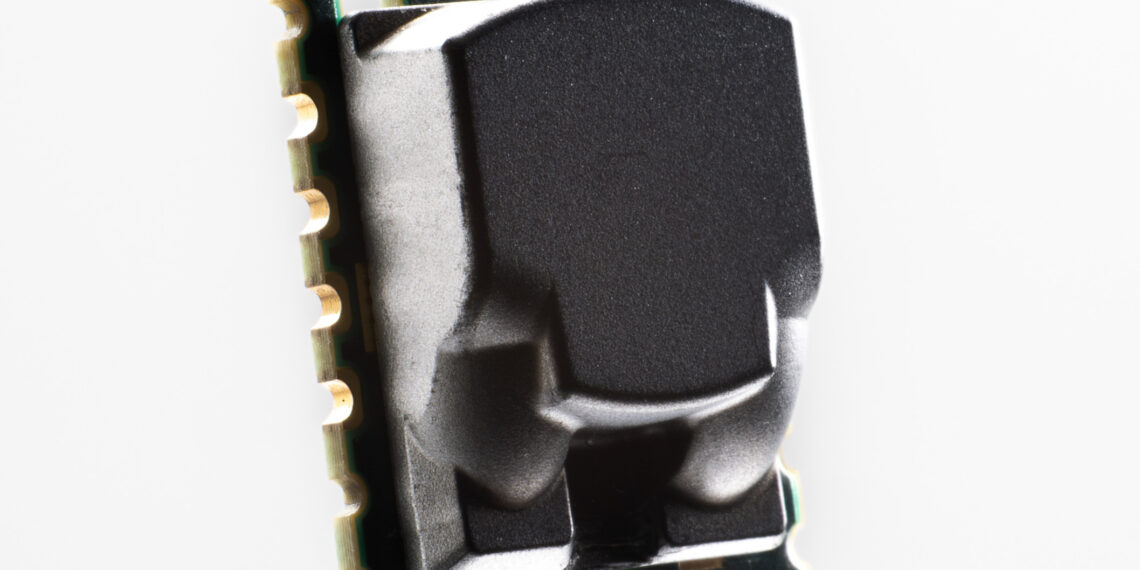
Senseair, a Swedish subsidiary of Asahi Kasei Microdevices, has launched the “S12 CO₂,” a next-generation carbon dioxide sensor designed to support demand-controlled ventilation (DCV) systems in zero-energy buildings and battery-powered indoor air quality (IAQ) monitoring applications. The company said the new sensor is approximately 75% smaller in volume than its predecessors and is compatible with surface-mount device (SMD) soldering, addressing long-standing integration and installation challenges in building systems.
The launch comes amid tightening global regulations aimed at improving building energy efficiency. In the European Union, the Energy Performance of Buildings Directive adopted in 2024 mandates that new buildings meet zero-emission standards, with compliance required for public buildings by 2028 and for all new buildings by 2030. These regulations are accelerating the adoption of intelligent DCV systems, which adjust ventilation levels based on CO₂ concentrations rather than temperature alone, helping reduce energy consumption while maintaining occupant comfort.
Despite their benefits, DCV systems require the deployment of CO₂ sensors throughout a building, often in space-constrained environments. Senseair said the compact form factor of the S12 CO₂ sensor is intended to overcome these design limitations, enabling broader and more flexible sensor placement across commercial and residential installations.
The S12 CO₂ sensor is based on Senseair’s non-dispersive infrared (NDIR) absorption technology and offers a measurement range of 400 to 10,000 parts per million (ppm). It delivers an accuracy of ±(30 ppm + 3% of reading), matching the performance of the company’s existing Sunrise and Sunlight CO₂ sensors while significantly reducing size. The new sensor measures 18 mm × 15 mm × 7 mm, allowing it to be discreetly integrated into air conditioning equipment, wall-mounted monitors, and other compact enclosures.
A key feature of the S12 CO₂ is its ability to be mounted using standard SMD reflow soldering processes. This capability simplifies manufacturing and supports more streamlined product designs, particularly in applications where traditional through-hole sensors are difficult to install.
For retrofit projects, where wiring and cabling can be costly or impractical, the sensor’s ultra-low power consumption enables battery-powered operation. Senseair said this makes the S12 CO₂ suitable for standalone IAQ monitors and wireless building energy management systems (BEMS), expanding its use across office buildings and commercial facilities in Europe, North America, and Asia. Additional applications include residential air conditioning units and heat exchangers.
The S12 CO₂ sensor complies with globally recognized building and air quality standards, including ANSI/ASHRAE Standard 62.1-2022 Addendum d, RESET Grade B, and the WELL Building Standard (WELL v2). Senseair has begun distributing samples and plans to start mass production of the sensor in 2026.