

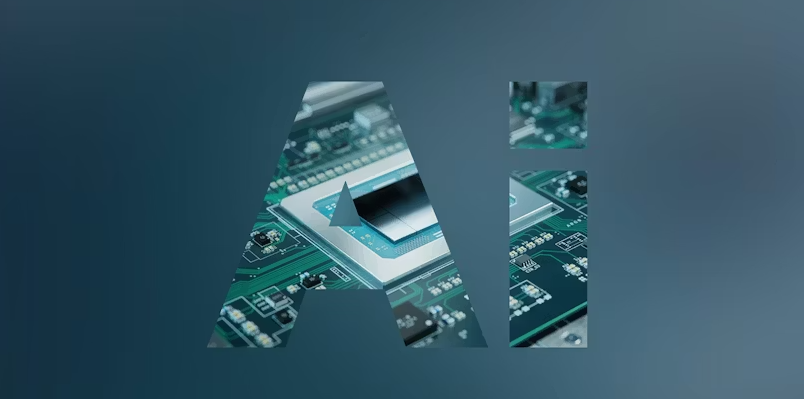
Siemens has introduced the Fuse EDA AI Agent, a domain-specific autonomous system designed to orchestrate complex workflows across semiconductor, 3D IC, and printed circuit board (PCB) design environments. The launch marks a shift from in-tool artificial intelligence to end-to-end workflow automation across the electronic design automation (EDA) lifecycle.
The Fuse EDA AI Agent is built to plan, coordinate, and execute multi-tool and multi-agent processes spanning design, verification, and manufacturing sign-off. It integrates with Siemens’ broader EDA portfolio and is supported by advanced AI infrastructure, including technologies from NVIDIA. By leveraging NVIDIA’s Agent Toolkit and Nemotron models, the system aims to enhance engineering productivity while improving design quality.
According to Amit Gupta, the new system represents the next phase of Siemens’ Fuse EDA AI strategy, extending beyond embedded AI capabilities to deliver full lifecycle automation. He noted that the open architecture allows enterprises to integrate their own workflows and models, supporting scalable AI adoption across complex engineering environments.
The Fuse EDA AI Agent builds on Siemens’ existing Fuse EDA AI system, which incorporates a retrieval-augmented generation (RAG) pipeline, a multimodal EDA data lake, and specialized parsers for industry-specific file formats. It also supports multiple AI models and third-party integrations, enabling flexibility across diverse design ecosystems.
A key feature of the platform is its ability to provide comprehensive coverage across the semiconductor and PCB workflow. In front-end design and verification, the agent supports architectural exploration, design planning, and register-transfer level (RTL) coding through integration with Siemens’ Catapult software. For digital verification, it enables automated testbench generation and debugging using the Questa One Agentic Toolkit.
As designs progress to physical implementation, the system assists with place-and-route processes, timing closure, and power optimization through Aprisa software. It also supports custom design verification using Solido software and hardware-assisted validation via the Veloce system. For physical verification, the agent automates design rule check (DRC) analysis and resolution using Calibre tools.
The platform extends its capabilities to emerging technologies such as 3D IC design, where it facilitates power and signal optimization through Innovator3D IC software. In PCB workflows, it aids layout design and signal integrity analysis through Xpedition and Hyperlynx tools. Additionally, it supports manufacturing readiness through Tessent software, enabling design-for-test (DFT) workflows and integration with optical proximity correction processes.
Siemens has emphasized that traditional AI tools often struggle in EDA environments due to the complexity and specificity of engineering data. Generic AI models may lack the domain expertise required to interpret physics-based datasets and can introduce risks related to intellectual property and data security. The Fuse EDA AI Agent addresses these challenges through domain-specific intelligence, built-in validation mechanisms, and customizable “Agent Skills” that execute multi-step workflows with precision.
The system also incorporates a scalable AgentOps architecture, enabling dynamic tool discovery and orchestration across both Siemens and third-party solutions. Its hierarchical structure, consisting of supervisor and worker agents, allows for efficient task management and autonomous recovery from workflow disruptions.
From an infrastructure perspective, the platform is designed to operate within high-performance computing environments, optimizing resource allocation across clusters while maintaining reliability. It also includes enterprise-grade data orchestration, allowing organizations to manage workflows within secure, air-gapped environments.
Security and governance are central to the platform’s design, with features such as role-based access controls, audit trails, and human oversight checkpoints to ensure safe and compliant operation in sensitive design environments.
The development is part of a broader collaboration between Siemens and NVIDIA to advance agentic AI in engineering workflows. Kari Briski stated that the partnership is focused on enabling autonomous agents capable of planning, executing, and adapting across complex design tasks. NVIDIA is already utilizing Siemens’ Fuse EDA solution in its own chip development processes.
Industry adoption is also gaining traction, with Samsung Electronics highlighting the platform’s potential to enhance productivity and design innovation within advanced semiconductor workflows. Jung Yun Choi noted that such solutions could help accelerate the transition beyond traditional automation models.
Looking ahead, Siemens plans to further expand the platform’s capabilities by integrating additional components from NVIDIA’s enterprise AI stack, including tools designed to support always-on autonomous agents.