

Wayve, Uber and Nissan Motor Co., Ltd. have entered into a collaboration aimed at developing autonomous robotaxi services, with plans to begin pilot operations in Tokyo by late 2026. The initiative will combine Wayve’s AI-powered autonomous driving technology with Nissan’s electric vehicles and Uber’s global ride-hailing platform to deliver autonomous mobility services in one of the world’s most complex urban transportation environments.
The three companies have signed a memorandum of understanding outlining their cooperation on integrating Wayve’s end-to-end AI autonomous driving system, known as the AI Driver, into Nissan vehicles. The system will be deployed in the Nissan LEAF electric vehicle platform, which will operate within Uber’s ride-hailing network, allowing riders to request autonomous trips through the Uber app.
The collaboration marks Uber’s first autonomous vehicle partnership in Japan and represents another step in the company’s broader strategy to expand robotaxi services globally. The initiative is part of a larger rollout that includes planned deployments in more than ten cities worldwide, including London.
During the initial phase of deployment, the robotaxi vehicles will operate on the Uber platform with trained safety operators on board. This approach is intended to allow riders to experience autonomous ride services while ensuring operational oversight as the technology continues to be tested and refined in real-world conditions.
Tokyo presents a particularly demanding environment for autonomous vehicle development due to its dense traffic conditions, complex road networks, and high safety expectations. By launching the pilot in such a setting, the companies aim to demonstrate the reliability and scalability of their autonomous mobility platform.
According to Alex Kendall, the project represents an important milestone in introducing embodied AI into advanced mobility markets. Wayve has been testing its technology across Japan since early 2025, gathering real-world driving data and adapting its systems to the country’s distinctive traffic patterns and road infrastructure.
Unlike some autonomous driving systems that rely heavily on high-definition mapping, Wayve’s AI Driver is designed to learn from real-world data and adapt to new environments without requiring detailed pre-mapped routes. This capability is intended to support faster deployment across multiple cities and varying driving conditions.
Ivan Espinosa said the initiative builds on the company’s broader efforts to integrate advanced AI technologies into its vehicle portfolio. By combining Nissan’s electric vehicle platform with Wayve’s AI capabilities and Uber’s ride-hailing network, the companies aim to translate emerging mobility technologies into practical, everyday transportation solutions.
For Uber, the collaboration reflects the company’s growing focus on autonomous mobility as a long-term component of its platform. Dara Khosrowshahi said the partnership will help expand new mobility options for riders while addressing transportation challenges such as driver shortages in major urban markets.
Uber plans to introduce the robotaxi service in Japan through a licensed taxi partner and will work closely with local regulators and authorities as the project moves toward pilot deployment.
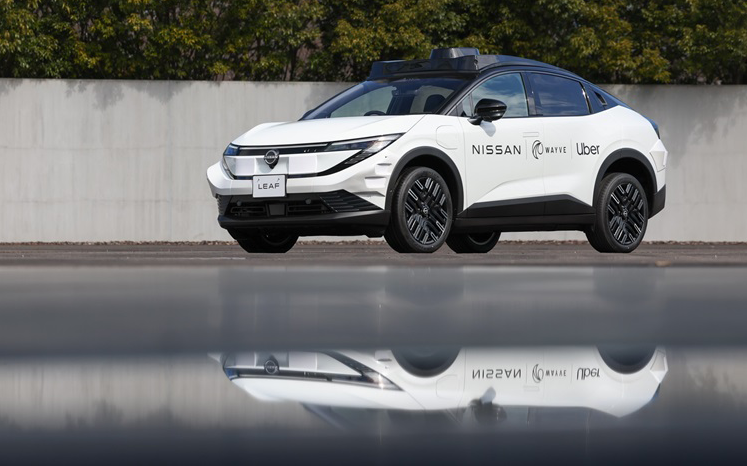
As part of the initiative, the companies also unveiled an early prototype of the robotaxi vehicle based on the Nissan LEAF platform. The pilot program is expected to provide valuable insights into the operational, technological, and regulatory aspects of autonomous mobility in large-scale urban environments.