

HRL Laboratories has achieved a key manufacturing milestone for its 40-nanometer gallium nitride on silicon carbide (GaN-on-SiC) technology, reaching Manufacturing Readiness Level (MRL) 6. The validation marks a significant step toward large-scale production of advanced RF semiconductor technology for defense and high-performance commercial applications.
The MRL 6 certification confirms that HRL’s T3L 40nm GaN-on-SiC process is manufacturable using production-relevant fabrication flows. It also demonstrates consistent process control and supply chain stability in line with U.S. Department of Defense manufacturing standards. This level of readiness supports the potential adoption of the technology across a range of government programs.
As part of its scale-up strategy, HRL is preparing to transition high-volume manufacturing to MACOM, following an earlier agreement announced in 2025. HRL will continue to offer low-volume engineering foundry services and multi-project wafer (MPW) access for qualified customers. This dual approach is intended to support both rapid prototyping and commercial-scale production within a unified ecosystem.
Dr. Erdem Arkun, Group Manager at HRL Laboratories, said achieving MRL 6 and defining a high-volume manufacturing path are important steps toward establishing sustainable domestic RF GaN production.
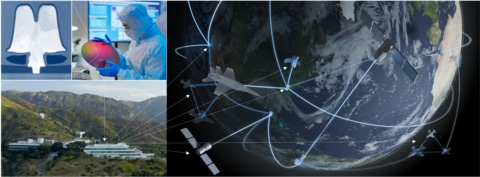
The company also indicated that its process is compatible with advanced heterogeneous integration and three-dimensional heterogeneous integration (3DHI) architectures. These capabilities allow closer integration with digital control electronics, beamforming systems, and next-generation radar and communication modules. The result is improved performance along with reductions in size, weight, and power for complex systems.
Dr. Andrea Arias-Purdue, Principal Investigator at HRL, noted that the T3L GaN process supports next-generation array systems by enabling compact, high-performance, and energy-efficient designs.
HRL said it is open to collaborating with partners to integrate the technology into advanced systems, supporting further innovation in both defense and commercial sectors.