

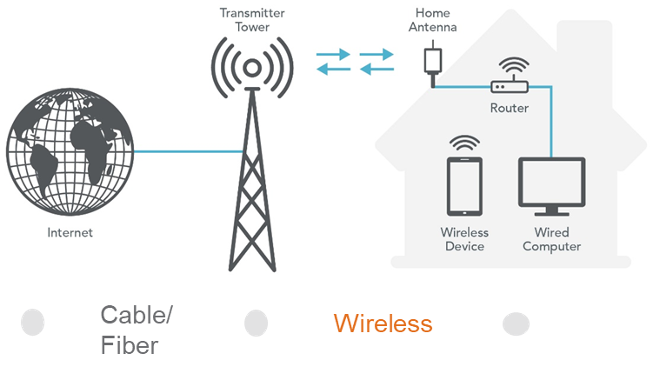
Fixed Wireless Access (FWA) is continuing its steady rise as a mainstream broadband option, with no immediate signs of slowing adoption across residential and enterprise segments. According to a newly released report from Dell’Oro Group, global FWA revenues are on track to grow by 10 percent in 2025, supported by expanding 4G LTE and 5G Sub-6GHz network coverage and the relative ease of deploying wireless broadband compared with fixed-line alternatives.
The report, which tracks revenues from radio access network (RAN) equipment, residential customer premises equipment (CPE), and enterprise routers and gateways, notes that mobile operators are increasingly using FWA to compete directly with legacy DSL and cable broadband services. This trend is most pronounced in the United States, where major operators have expanded FWA availability across both existing and new markets.
“In the U.S., we continue to see the largest mobile operators broaden their FWA footprints, and service revenues from FWA are increasingly contributing to overall earnings,” said Jeff Heynen, vice president at Dell’Oro Group.
Similar strategies are now emerging in other regions. Mobile operators in India, Southeast Asia, Europe, and the Middle East are accelerating FWA rollouts, drawing lessons from the U.S. market. Dell’Oro notes that this expansion is also influenced by the growing presence of low Earth orbit (LEO) satellite broadband providers such as Starlink, Amazon, and OneWeb, which are expected to intensify competition for broadband subscribers.
Dell’Oro’s findings point to sustained long-term growth in FWA adoption. Total global FWA subscriptions—including residential users, small and medium-sized businesses, and large enterprises—are forecast to exceed 191 million by 2029. The steady increase reflects rising demand for fast, flexible connectivity, particularly in areas where fiber deployment remains costly or time-consuming.
On the technology front, the report indicates that 5G Sub-6GHz and millimeter-wave solutions will dominate the global residential CPE market. As network performance improves and device ecosystems mature, these technologies are expected to further strengthen FWA’s position in the broadband access market.
Collectively, the findings suggest that FWA is evolving from a stopgap connectivity solution into a core component of operators’ broadband strategies worldwide.