


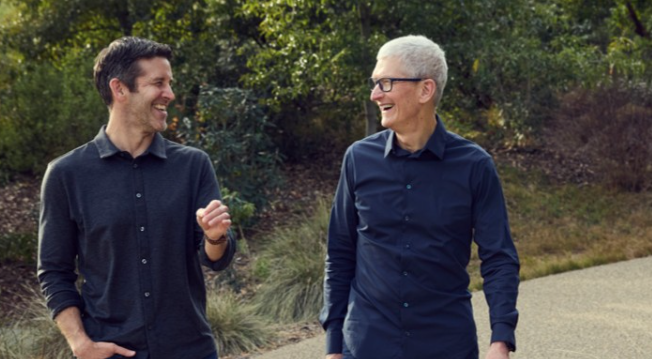
Apple Inc. has announced a major leadership transition, with Chief Executive Officer Tim Cook set to become executive chairman of the board and John Ternus, senior vice president of Hardware Engineering, appointed as the company’s next CEO. The changes will take effect on September 1, 2026, following unanimous approval by the board of directors.
Cook will continue as CEO through the summer, working closely with Ternus to ensure a structured transition. In his new role as executive chairman, Cook is expected to remain actively engaged in strategic areas, including global policy engagement and advisory functions within the company.
The leadership shift is part of a long-term succession plan at Apple, one of the world’s most valuable technology companies. Arthur Levinson, who has served as non-executive chairman for 15 years, will transition to the role of lead independent director. Ternus will also join Apple’s board as part of the transition.
Cook, who joined Apple in 1998 and became CEO in 2011, has overseen a period of significant growth and transformation. During his tenure, the company expanded its product ecosystem with categories such as Apple Watch, AirPods, and Apple Vision Pro, while strengthening its services portfolio, including iCloud, Apple Pay, Apple TV, and Apple Music. Apple’s market capitalization grew from approximately $350 billion in 2011 to nearly $4 trillion, while annual revenue increased from $108 billion to over $416 billion in fiscal year 2025.
Under Cook’s leadership, Apple also transitioned to in-house silicon design, a move widely seen as a defining strategic shift that improved performance efficiency across its product lines. The company expanded its global footprint to more than 200 countries and territories and grew its installed device base to over 2.5 billion units.
In addition to business growth, Cook emphasized sustainability, privacy, and accessibility as core pillars of Apple’s strategy. The company reduced its carbon footprint by more than 60 percent compared to 2015 levels while nearly doubling revenue, and positioned privacy as a central feature of its product ecosystem.
Ternus, who will take over as CEO, brings over two decades of experience within Apple. He joined the company’s product design team in 2001 and rose through the ranks to lead hardware engineering in 2021. His work has spanned multiple product categories, including iPhone, Mac, iPad, and Apple Watch, as well as newer innovations such as AirPods.
He has played a key role in advancing Apple’s hardware capabilities, including improvements in reliability, materials engineering, and sustainability. His leadership has also contributed to the continued evolution of the Mac lineup and recent product launches such as the latest iPhone series and MacBook innovations.
Alongside the CEO transition, Apple announced that Johny Srouji will assume the role of Chief Hardware Officer, effective immediately. Srouji, previously senior vice president of Hardware Technologies, will oversee both hardware engineering and the broader hardware technologies organization.
Srouji has been instrumental in shaping Apple’s silicon strategy, including the development of custom chips that power its devices. Since joining Apple in 2008 to lead development of the A4 chip, he has overseen advancements across key technology areas such as processors, batteries, cameras, displays, and connectivity components.
The restructuring reflects Apple’s continued emphasis on vertical integration and control over its core technologies, particularly as hardware, software, and silicon development become increasingly interdependent.
In statements accompanying the announcement, Cook described Ternus as a “visionary” leader with deep technical expertise and a strong alignment with Apple’s values. Ternus, in turn, acknowledged Cook’s mentorship and expressed confidence in carrying forward the company’s mission.
The leadership changes come at a time when Apple continues to navigate a rapidly evolving technology landscape, marked by increasing competition, advancements in artificial intelligence, and shifting global supply chain dynamics. The transition signals continuity in leadership philosophy while reinforcing Apple’s focus on engineering-led innovation.