


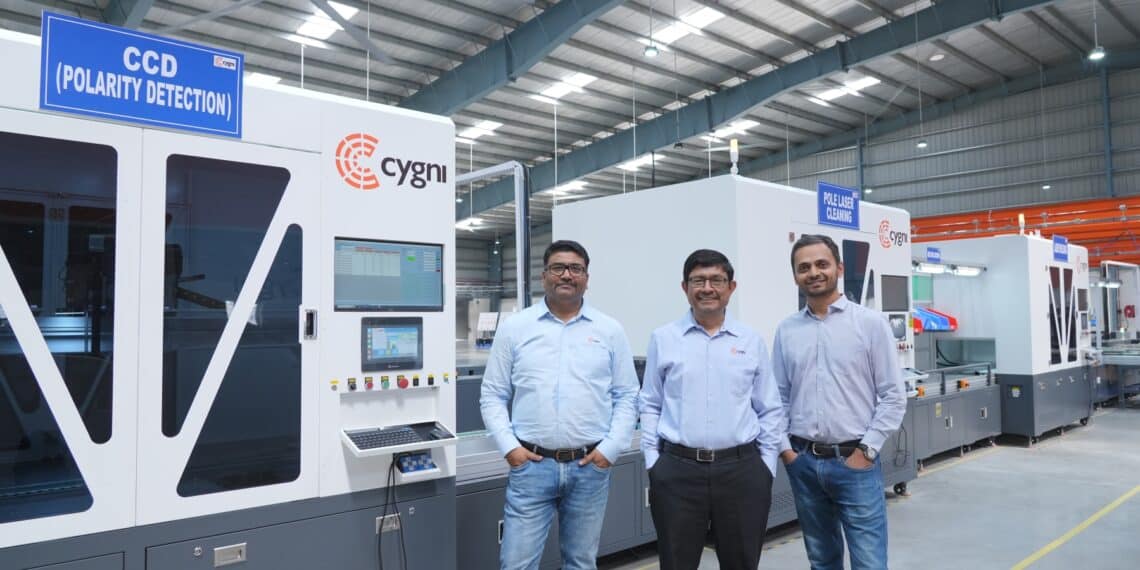
Cygni Energy Private Limited and Indus Towers Limited (NSE: INDUSTOWER) have signed a memorandum of understanding to explore energy storage solutions for India’s telecom infrastructure, as the sector looks to improve power reliability and efficiency.
The proposed collaboration includes plans to establish battery energy storage system (BESS) manufacturing capacity of up to 1.5 GWh. The companies will also evaluate advanced battery technologies for telecom applications.
The agreement comes as India’s telecom infrastructure continues to expand, increasing the need for dependable power systems at tower sites. Telecom towers often require backup and energy management systems to maintain network availability, particularly in locations where grid supply can be inconsistent.
Focus on Local Energy Storage Manufacturing
Under the MoU, Cygni Energy and Indus Towers will explore sourcing energy storage systems for telecom infrastructure while assessing technologies suited to the sector’s evolving requirements.
Cygni Energy said the initiative is intended to combine manufacturing scale with the development of battery technologies designed for future telecom applications.
Venkat Rajaraman, founder and CEO of Cygni Energy, said the company plans to develop capacity of up to 2 GWh and expand its product portfolio from current 100Ah solutions toward higher-capacity 314Ah systems and emerging battery technologies.
The company’s broader objective is to build energy storage capabilities that can support the expansion of India’s digital infrastructure, Rajaraman said.
The different capacity figures reflect separate aspects of the proposal: the MoU outlines potential BESS manufacturing capacity of up to 1.5 GWh, while Cygni Energy has separately stated an ambition to develop capacity of up to 2 GWh.
Telecom as a Test Market for Batteries
Prof. Ashok Jhunjhunwala, Institute Professor at IIT Madras and chairman of ITEL Foundation, said collaboration among users, startups, manufacturers and technology institutions could help accelerate the development and adoption of energy storage technologies in India.
Telecom infrastructure represents a significant application for battery technologies because network availability depends on reliable power at geographically distributed sites.
For India, greater domestic manufacturing could also reduce supply-chain exposure while supporting the development of local engineering and energy storage capabilities.
The collaboration comes as battery storage becomes increasingly important across India’s energy and infrastructure sectors. While the MoU does not establish a final manufacturing commitment, it sets out an intent to evaluate technology, sourcing and capacity opportunities between the two companies.