

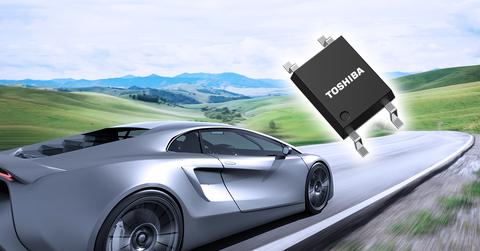
Toshiba Electronic Devices & Storage Corporation, part of Toshiba Corporation (TYO: 6502), has launched the TLX9909, a photovoltaic-output photocoupler designed to drive high-voltage power metal-oxide-semiconductor field-effect transistors (MOSFETs) in automotive equipment. The new component supports solid-state relay (SSR) applications and allows designers to adjust turn-off time through an external circuit.
Volume shipments of the TLX9909 began on Nov. 19, 2026, according to the company.
The launch addresses growing requirements for smaller, longer-lasting and more reliable relay systems in automotive electronics. Conventional mechanical relays use physical contacts that can wear out or fail over time. SSRs, which rely on semiconductor switching and have no moving contacts, offer an alternative for applications requiring improved operational reliability.
External circuit enables flexible gate control
The TLX9909 uses a photodiode array to generate electrical power when illuminated by an LED on the input side. This output directly drives the gate of a discrete MOSFET, eliminating the need for a separate power supply on the isolated side or an additional charge-pump circuit.
By reducing the number of supporting components, the device is designed to simplify circuit configurations, reduce system size and improve reliability.
Unlike Toshiba’s TLX9910, which incorporates a built-in control circuit, the TLX9909 does not include an internal control circuit. Instead, designers can select an external gate-discharge circuit to adjust the MOSFET’s turn-off time according to the application and connected device.
The component maintains a minimum open-circuit voltage of 13.5 volts, matching the TLX9910. This is higher than the 7-volt minimum offered by Toshiba’s existing TLX9905 and TLX9906 photocouplers, making the new device suitable for driving a broader range of high-voltage power MOSFETs.
Targets automotive power management systems
When paired with an external high-voltage power MOSFET, the TLX9909 can support flexible high-voltage, high-current switching circuit designs. This approach also allows engineers to select MOSFETs according to system requirements rather than being restricted by the ratings of integrated MOSFETs in conventional photorelays.
Toshiba’s product lineup now offers two approaches to gate control: the TLX9909, which provides flexibility through external circuitry, and the TLX9910, which incorporates a built-in discharge circuit. The choice allows designers to balance circuit flexibility against component count.
The TLX9909 complies with AEC-Q101, the reliability qualification standard for automotive semiconductor components. Its intended applications include battery management systems (BMS), on-board chargers (OBCs) and automotive inverter units.
Toshiba said it will continue expanding its photocoupler portfolio for automotive and industrial equipment, with an emphasis on improving system reliability and supporting evolving power electronics requirements.