


Malaysia’s semiconductor industry is expected to benefit from rising AI-driven data centre demand, supply chain diversification, and deeper localisation by global chip equipment makers, according to a report by Hong Leong Investment Bank Research.
The report said Malaysia’s outsourced semiconductor assembly and test (OSAT) sector largely missed the first phase of the AI semiconductor boom in 2024 and 2025. Growth during that period was driven mainly by graphics processing units (GPUs) and high bandwidth memory (HBM), while Malaysian players continued to face weak demand from the automotive and industrial sectors.
However, the research house expects 2026 to mark a turning point for the industry.
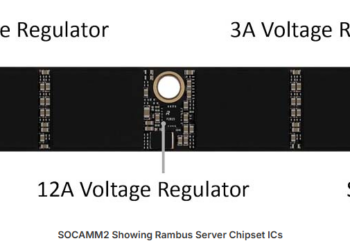
It said accelerating AI data centre expansion is increasing demand for high-performance power management chips. AI server racks are becoming denser and more power-intensive. Current power consumption levels of 120kW to 150kW could eventually rise to between 600kW and 1,000kW.
This is expected to increase demand for power semiconductors across the power delivery chain.
The report noted that efficient power delivery is emerging as a key challenge in AI data centre deployment. At the same time, evolving AI infrastructure designs are expanding demand for optical and power semiconductor components.
Malaysia is also benefiting from the ongoing China+1 supply chain strategy. More semiconductor companies are diversifying manufacturing and sourcing operations beyond China.
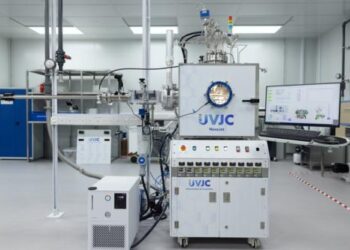
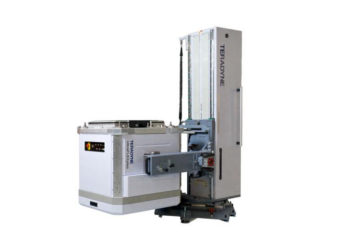
In addition, global semiconductor equipment makers are increasing localisation efforts in Malaysia, further strengthening the country’s semiconductor ecosystem.
Industry analysts believe these trends could support stronger growth for Malaysia’s semiconductor sector over the next few years.