

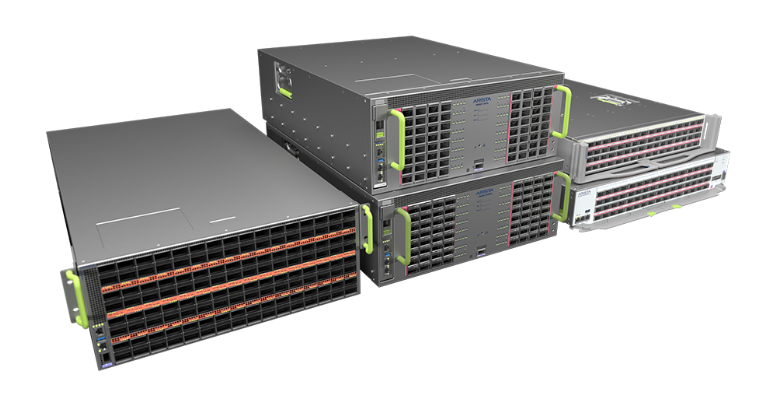
Arista Networks has introduced its next-generation 1.6 terabit networking portfolio with the launch of the 7060XE7 Series. The company positioned the new systems as foundational infrastructure for rack-scale artificial intelligence deployments.
The announcement reflects a broader shift in AI infrastructure design. Networking is no longer treated as a separate layer. It is now a core component of large-scale AI systems. Arista described this shift as the emergence of AI fabrics that function as tightly integrated supersystems.
The 7060XE7 Series is designed for this environment. It targets AI clusters that are scaling from thousands to hundreds of thousands of accelerators. These systems demand higher bandwidth, lower latency, and tighter power efficiency.
Arista said the new portfolio moves beyond traditional switching hardware. It focuses on rack-scale system design. The goal is to support both scale-up and scale-out AI architectures.
The systems are built for extreme density. They are also designed for advanced thermal requirements. This includes air-cooled, liquid-cooled, and hybrid deployments. The aim is to maximize compute density per kilowatt.
Arista emphasized that power efficiency has become a central constraint in AI infrastructure planning. The 7060XE7 Series supports low-power optics and optimized cooling configurations. This helps reduce operational overhead in large data centers.
A key feature of the platform is integration with Arista’s Extensible Operating System, known as EOS. The software is designed to manage complex traffic patterns in AI workloads. These include burst-heavy communication and collective processing across accelerators.
The company said the systems are optimized for both intra-rack and inter-rack communication. This is critical for distributed AI training and inference environments.
Arista also introduced intelligent packet buffering mechanisms. These are designed to manage microbursts in AI traffic. The goal is to maintain consistent throughput under heavy load conditions.
Tyson Lamoreaux, Senior Vice President of Cloud and AI Networking at Arista Networks, said the network is now part of the AI compute system itself. He said the 7060XE7 Series combines high-performance switching with liquid cooling and low-power optics to improve efficiency at scale.
The portfolio includes multiple hardware configurations. The 7060XE7-64PS and 7060XE7-64PRS are air-cooled rack switches. They support integrated and riding heat sink optics. These systems are designed for flexible deployment in standard data center environments.
The 7060XE7-64PRS-RV3-L is a liquid-cooled platform. It is built for high-density clusters. It uses 224G SerDes and operates without internal fans. It is designed for ORv3 rack power systems. This enables tighter integration with liquid-cooled AI servers.
The 7060XE7-128PE is another key configuration. It delivers 128 ports of 800G connectivity. It uses 100G SerDes. It is designed for environments that require backward compatibility and flexible scaling.
Across the portfolio, Arista said the systems deliver up to 100 terabits per second of switching capacity. The architecture is built to support 1.6T per-port throughput. This enables higher bandwidth between AI accelerators and networking layers.
The company highlighted support for Linear Pluggable Optics. This technology reduces interconnect power consumption by approximately 60 percent. It also lowers total cost of ownership in large-scale deployments.
Arista has worked closely with hyperscale operators in developing these systems. Customers include Meta Platforms, Microsoft Corporation, and Oracle Corporation.
Meta said AI infrastructure must evolve to support higher density and energy efficiency. It highlighted the role of open and scalable AI fabrics in next-generation training and inference systems.
Microsoft emphasized bandwidth requirements for AI clusters. It referenced infrastructure supporting its AI accelerator programs, including Azure Maia and large-scale data center deployments. It also pointed to operational simplicity as a key requirement.
Oracle noted the importance of deterministic performance in AI training workloads. It said high-throughput and stable networking is essential for RDMA-based AI fabrics across global cloud infrastructure.
The 1.6T transition is supported by an expanding silicon ecosystem. Advanced Micro Devices is working with Arista on next-generation compute and networking integration. The focus is on open standards across CPUs, GPUs, and system software.
Broadcom Inc. is also a key partner. Its Tomahawk 6 switching silicon underpins parts of the 7060XE7 architecture. The collaboration is aimed at increasing bandwidth and improving scale-up and scale-out performance.
Arista said the combination of hardware and software is central to its strategy. The EOS platform includes features designed for AI resilience. These include dynamic load balancing and cluster load balancing.
The system also includes multipath reliability features. These reduce the risk of large training job failures caused by single link issues. Link-layer retry mechanisms are also included to improve stability.
Congestion management tools are built into the stack. These include PFC-aware load balancing and ECN mechanisms. These features are designed to prevent bottlenecks in high-traffic AI environments.
The platform also supports advanced telemetry and diagnostics. These tools provide real-time visibility into network health. This helps operators manage performance at scale.
Arista said availability will begin in phases. The 64-port air-cooled systems are expected in Q4 2026. Liquid-cooled and 128-port configurations are scheduled for early 2027.