

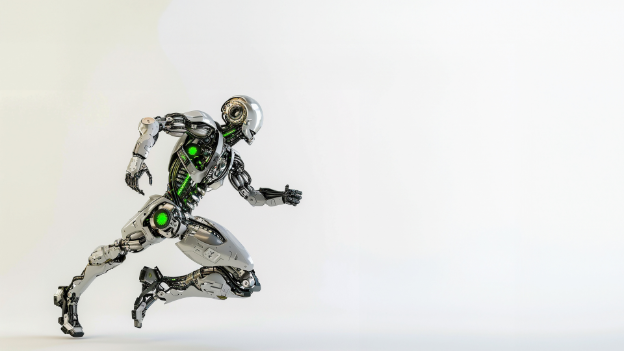
Barclays Research has projected that humanoid robots could significantly reshape the global economy over the next decade. The firm said physical AI is expected to influence productivity, labour markets, capital investment, and long-term asset returns across industries.
The findings were published in the latest Equity Gilt Study from Barclays Research. The report examines how AI is moving beyond software and digital applications into physical, real-world environments.
According to the report, automation is entering a third phase. Earlier automation waves focused on repetitive tasks and industrial machinery. Humanoid robots are now being designed to operate in human environments, use existing tools, and perform complete job functions.
Ajay Rajadhyaksha, Global Chairman of Research at Barclays, said humanoid robots combine artificial intelligence with physical capability and could have an impact far beyond the technology sector.
Barclays Research estimates the global humanoid robotics market could reach $200 billion by 2035. The report said falling production costs and advances in AI, mobility, and battery systems are expected to accelerate adoption.
The study identified China as the leading force in the global robotics sector. According to Barclays Research, China accounted for around 85 percent of humanoid robot deployments in 2025.
The report attributed China’s position to its manufacturing scale, established supply chains, and government-backed industrial policies. Barclays Research also noted that China controls several critical inputs required for robotics production.
The study said humanoid robots could help offset labour shortages caused by China’s aging population. Barclays estimates robots could fill up to 60 percent of the country’s workforce gap by 2035.
Barclays Research said humanoid robotics could also alter traditional economic structures. Historically, productivity gains have mainly benefited manufacturing, while labour-intensive sectors continued to grow as a larger share of GDP.
The report argued that humanoid robots could automate more complex physical work and increase the substitutability between labour and capital in industries that previously resisted automation.
At the same time, Barclays Research said automation has historically changed the nature of work rather than eliminating jobs entirely. The report noted that more than 60 percent of jobs in 2018 did not exist in 1940.
The study also examined the financial implications of physical AI. Barclays Research said markets may be underestimating the long-term economic impact of humanoid robots.
According to the report, humanoid robotics could improve productivity, support stronger earnings growth, and increase long-term economic output. Analysts added that the technology may also influence interest rates, investment trends, and sector-level performance across global markets.
The report concluded that physical AI is emerging as a major structural force that could reshape industries, labour markets, and economic growth patterns in the coming years.