

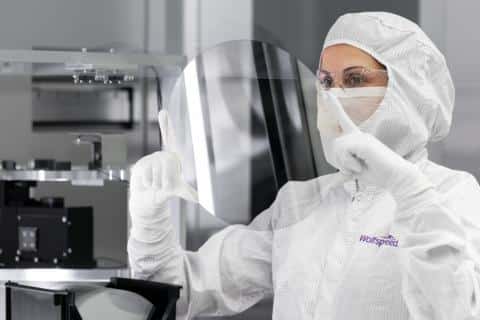
Wolfspeed (NYSE: WOLF) has commercially introduced its transparent silicon carbide (TSiC) technology, extending the use of the semiconductor material into augmented reality (AR), quantum computing and advanced optical applications. The company is developing the technology as a platform for optical components that require high light transmission, precision and thermal performance.
The introduction builds on Wolfspeed’s more than 35 years of work in silicon carbide, including its early contributions to LED technology and its manufacturing experience with high-purity semi-insulating (HPSI) wafers. Its optical-grade TSiC substrates are designed for low optical absorption and high wafer flatness, properties relevant to applications that depend on precise light transmission.
Silicon Carbide for AR Waveguides
In augmented reality, Wolfspeed sees potential for TSiC in optical waveguides used to direct digital images into a user’s field of view. Silicon carbide combines a high refractive index with low birefringence, hardness and thermal conductivity. These properties could support wider fields of view and improved image quality while helping reduce the size of wearable devices.
Barry Silverstein, a display systems and optics expert at the University of Rochester and former chief technology officer and senior director of optics and display products at Meta Reality Labs, said the material could help address longstanding design constraints in AR eyewear.
He noted that silicon carbide’s high refractive index could allow a single-layer waveguide to perform functions that have traditionally required stacked optical components. This could help designers balance field of view, image quality and device weight, although commercial adoption will depend on further product development and implementation.
Potential Applications in Quantum Computing
Wolfspeed is also positioning TSiC for quantum computing. According to the company, silicon carbide can host quantum bits, or qubits, preserve their quantum states and transmit quantum information through light within a single crystal. The ability to combine these functions in one material could make it relevant to emerging quantum systems.
Katrin Feurle, vice president of Beyond Power at Wolfspeed, said the technology reflects the company’s effort to extend silicon carbide innovation beyond conventional semiconductor applications. She cited AR, quantum computing and other emerging markets as potential areas of development.
Development Across Wafer Sizes
Wolfspeed said its TSiC technology is supported by an intellectual property portfolio covering its material and process advances. The company is continuing to develop 200 mm optical-grade substrates while working on 300 mm TSiC technology to address future market requirements.
The move places transparent silicon carbide among the materials being explored for next-generation optical and quantum applications. However, the commercial opportunity will depend on how quickly developers integrate the substrates into practical devices and scale manufacturing to meet market needs.