

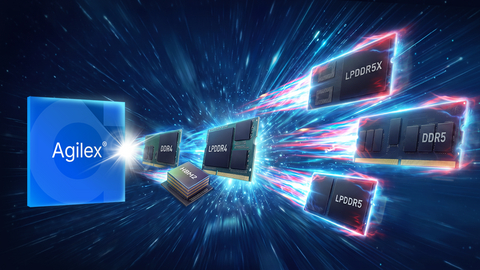
Altera has expanded DDR5, LPDDR5 and LPDDR5X-compatible memory support across its Agilex FPGA portfolio, targeting the rising bandwidth and power-efficiency requirements of AI, networking and embedded systems.
The expanded capabilities are available through Quartus Prime Pro Edition Software version 26.1.1, released by the FPGA supplier as part of its ongoing software and IP updates for the Agilex platform.
The release adds DDR5-6400 and LPDDR5-6400 support to Agilex 7 M-Series devices, alongside new LPDDR5 support for Agilex 3. Agilex 5 devices already support DDR5 and LPDDR5 memory.
For supported Agilex 7 M-Series configurations, the memory interfaces can deliver up to 204.8 GB/s of aggregate bandwidth at speeds of up to 6400 MT/s. The additional memory options are aimed at giving developers greater flexibility when balancing bandwidth, power consumption, board space and component availability.
Altera has also documented LPDDR5X device compatibility in LPDDR5-compatible mode for supported Agilex 5 and Agilex 3 devices. The approach allows customers to use qualified LPDDR5X memory options with existing LPDDR5 implementations without requiring a hardware redesign.
The expanded compatibility could become increasingly relevant as FPGA-based systems are deployed in applications where memory bandwidth and component availability can directly affect system design and deployment timelines. AI accelerators, intelligent-edge platforms and networking equipment increasingly require higher memory throughput while operating within constrained power and board-space budgets.
“Today’s AI and intelligent edge applications demand more memory bandwidth and greater design flexibility,” said Mike Fitton, vice-president of product and corporate marketing at Altera.
Altera said the latest update also demonstrates its approach of extending Agilex capabilities after production release through software, intellectual property and documentation updates. Customers can access the additional memory capabilities through the existing Quartus development environment without replacing their current Agilex hardware.
The company said broader DDR5 and LPDDR5 support can also provide greater flexibility in selecting memory components. LPDDR5X compatibility, in particular, expands qualified sourcing options for customers while retaining compatibility with existing LPDDR5-based designs.
Memory selection has become a larger consideration in system design as AI and networking workloads place greater demands on data movement between processors, accelerators and external memory. For FPGA developers, the ability to support multiple memory standards can also help address differences in performance, power and supply-chain requirements across applications.
Altera said the software update is available immediately and expands support for DDR5-6400, LPDDR5-6400 and LPDDR5X-compatible devices across its Agilex portfolio.
The company, which operates as an independent FPGA solutions provider following its separation from Intel, is positioning the expanded memory support as part of a broader effort to extend the flexibility and useful life of Agilex-based designs. The strategy allows customers to adopt new memory capabilities through software and IP updates while maintaining existing hardware and development flows.