


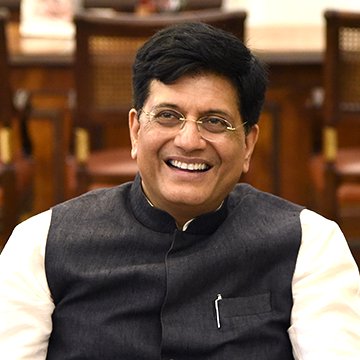
India plans to amend regulations and introduce new rules within two months to address concerns raised by semiconductor equipment and automotive component companies seeking to establish manufacturing operations in the country, Commerce and Industry Minister Piyush Goyal said on Monday.
The announcement came during Goyal’s visit to Tokyo, where he is leading a more than 200-member business delegation aimed at strengthening trade and investment ties between India and Japan. The delegation includes representatives from semiconductors, manufacturing, automotive, clean energy, steel, financial services, healthcare and startups.
Goyal said he had met two major companies considering manufacturing investments in India — one in semiconductor equipment and another in automotive components. Their concerns had been addressed during discussions, he said, with the government having already settled on the regulatory framework it intends to follow.
“I have assured them that within the next two months India will amend its regulations, bring in new rules to accommodate their requests and ensure that they will have absolutely no problem as they bring manufacturing into India,” Goyal said during a fireside chat with Nikkei Asia in Tokyo.
The minister did not identify the companies or specify the individual regulations that will be changed. The proposed measures are expected to focus in part on enabling manufacturers to source equipment and components internationally for their Indian facilities.
Goyal said the government has significantly simplified the Bureau of Indian Standards framework and is working to make approvals easier, including for suppliers that may not yet fall under revised regulations. The changes are intended to reduce regulatory friction for companies bringing production into India while maintaining safeguards for domestic industries.
India’s approach will not mean unrestricted access in every sector, however. Goyal said the government would continue to protect industries where imported products are supplied at what he described as “predatory prices,” citing the need to maintain fair-trade practices and comply with World Trade Organization obligations.
The regulatory push comes as India seeks to attract more capital into its semiconductor ecosystem. Goyal said the government, together with the private sector, aims to seed about $50 billion in semiconductor and related industries over the next year to 18 months under the next phase of the country’s semiconductor strategy.
The proposed rule changes are also part of a broader effort to deepen India-Japan industrial ties. Goyal has described the two economies as complementary, with Japan bringing technology, industrial expertise and business practices, while India offers manufacturing scale, a large domestic market and a young workforce.
The minister has rejected the characterization of India simply as a “plus-one” manufacturing destination for companies seeking alternatives to China, arguing that India should be viewed as a market and production base in its own right.
Semiconductors, automotive components and artificial intelligence are among the areas where the two countries see opportunities for greater cooperation. Goyal has also pointed to a broader AI ecosystem spanning large language models, applications, equipment, semiconductors, computing infrastructure, data centers and energy.
The Tokyo visit is designed to translate that policy relationship into business activity. India’s delegation is traveling to Tokyo, Nagoya and Osaka, with meetings involving major Japanese companies and industry groups. The government has also encouraged Japanese companies to increase localization, establish research and development operations and expand manufacturing capacity in India.
India is simultaneously expanding its trade network to make the country a more integrated manufacturing base. Goyal has highlighted the role of free-trade agreements in allowing companies producing in India to access overseas markets.
For semiconductor and automotive component manufacturers, the proposed two-month regulatory timetable could provide greater clarity around imported equipment, components and supplier approvals. In capital-intensive industries where production facilities require large upfront investments, such certainty can influence decisions on plant location, sourcing and supply-chain design.
The changes will be closely watched by global manufacturers considering India as a production base. Whether the measures translate into faster approvals and fewer import-related bottlenecks will determine how effectively the policy supports the country’s ambitions to build a larger semiconductor and advanced manufacturing ecosystem.