

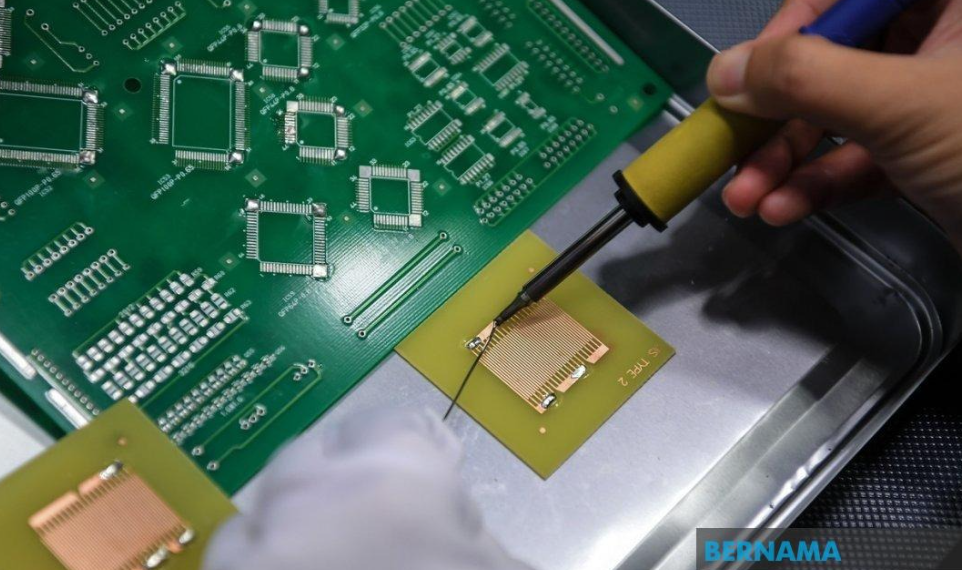
Penang is targeting a shift from its established strength in semiconductor assembly and testing towards higher-value activities such as chip design, system architecture and prototype development, as the Malaysian state seeks to become a leading semiconductor design hub in ASEAN by 2040.
The strategy is outlined in the Draft Penang State Structure Plan 2040 (RSNPP 2040), prepared by the Penang State Town and Country Planning Department (PLANMalaysia Penang). The document sets out a broader development strategy for the state, with semiconductor research and development, innovation and technology commercialization identified as priorities for increasing the industry’s economic value.
Under the proposed plan, agencies including InvestPenang and the Malaysian Investment Development Authority (MIDA) are expected to support the transition, alongside the Northern Corridor Implementation Authority, Penang Skills Development Centre, Penang STEM, Perda-Tech and Talent Corporation Malaysia (TalentCorp).
The shift would position Penang further upstream in the semiconductor value chain. The state has developed a substantial electronics and semiconductor manufacturing base, particularly in assembly and testing, but the new strategy seeks to expand capabilities that generate greater value through intellectual property, engineering expertise, product development and technology commercialization.
A key part of the plan is strengthening the role of local micro, small and medium enterprises in the semiconductor supply chain. The state government intends to help these companies become technology vendors through technological upgrades, automation, industry-standard certification and compliance with global requirements.
The draft proposes mechanisms to connect multinational corporations with local MSMEs, with the aim of increasing local content, enabling technology transfer and allowing more Malaysian companies to participate in higher-value sections of the semiconductor supply chain.
Penang’s economic targets under the draft include annual gross domestic product growth of 4.7% through 2030 and 4.6% through 2040. That compares with GDP growth of 5.0% recorded in 2025. Manufacturing growth is targeted at 4.4% annually in both 2030 and 2040, compared with 5.9% achieved in 2025.
The semiconductor strategy forms part of a wider effort to diversify Penang’s economy. The state is also seeking to move its medical-device industry toward higher-value manufacturing by strengthening its existing cluster and encouraging advanced automation, engineering integration and production of high-technology devices.
The draft places particular emphasis on certification capabilities and market approvals in the medical-device sector. These measures are intended to improve export access and strengthen the industry’s competitiveness in international markets.
Penang is also planning to expand high-value services and the digital economy through the development of a Central Business District focused on information technology, data and analytics, artificial intelligence, finance, digital engineering and global business services.
The proposed services expansion is intended to support both regional and global operations while creating another source of higher-value economic activity beyond manufacturing. Smart logistics, trade facilitation and industrial support services are also expected to receive greater attention as Penang seeks to improve export efficiency and supply-chain resilience.
The Draft RSNPP 2040 is intended to replace the existing RSNPP 2030, which is approaching the end of its planning period. The document provides a long-term framework covering Penang’s physical, economic, social and environmental development through 2040.
The state said the previous RSNPP 2030 recorded a 99.3% implementation rate, which it described as evidence of the effectiveness of the policies and strategies established under the plan.
The new draft is currently open for public inspection and feedback until September 9, 2026. If adopted, its semiconductor ambitions would give Penang more than a manufacturing role in ASEAN’s chip ecosystem, with design, R&D and technology development becoming increasingly important to the state’s industrial strategy over the next 14 years.