

The Philippines is targeting development of the first 500 hectares of the planned Pax Silica artificial intelligence (AI) hub in Central Luzon within three to five years, as the government positions the project as a long-term platform for semiconductor and AI-related investment.
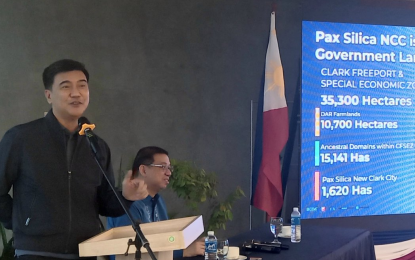
Bases Conversion and Development Authority (BCDA) President and Chief Executive Officer Joshua Bingcang said the initial development would cover part of the 1,620-hectare site at New Clark City in Tarlac.
“We see this as a long-term investment,” Bingcang said during a briefing at New Clark City, adding that the first phase is expected to begin within three to five years.
Full development of the project is expected to unfold over roughly 30 years. The government projects that the initiative could eventually help raise the Philippines’ exports to around $200 billion.
The country recorded merchandise exports of $84.48 billion in 2025, a record high, with semiconductors among the major contributors.
The Pax Silica initiative is intended to attract semiconductor manufacturers and companies supplying technologies and infrastructure required by the expanding AI industry. The government sees the project as part of a broader effort to move the Philippines’ semiconductor sector towards higher-value activities.
Bingcang also sought to clarify reports describing Pax Silica as an energy-intensive development centred on large data centres. He said any data centres established within the initiative would primarily support semiconductor companies operating at the site.
“We will not put up data centers here,” he said, noting that New Clark City is designed predominantly for industrial use.
Large-scale data centres serving global clients, if developed, would be separate from the Pax Silica initiative and located outside the designated site.
The distinction is significant as the Philippines seeks to build AI-related industrial capacity without positioning the project primarily as a hyperscale data-centre destination.
The initiative forms part of New Clark City’s wider master plan, which is designed to accommodate multiple industries. The government expects semiconductor and AI-related companies to form an important part of the development as global demand for computing infrastructure and advanced electronics continues to expand.