

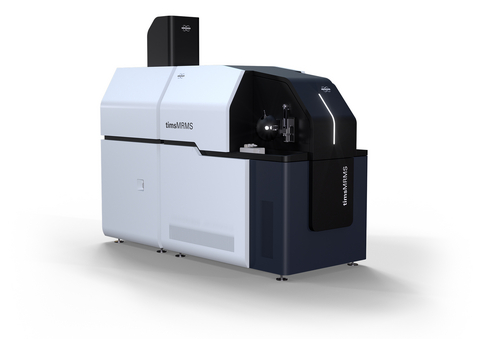
Bruker Corporation (Nasdaq: BRKR) has introduced its new timsMRMS mass spectrometry platform, designed to help researchers analyze ultra-complex chemical mixtures in energy-related applications, including advanced batteries, sustainable fuels, and petroleomics.
The launch was announced at the American Society for Mass Spectrometry (ASMS) conference.
The timsMRMS system combines Trapped Ion Mobility Spectrometry (TIMS) with Magnetic Resonance Mass Spectrometry (MRMS), creating a platform capable of characterizing highly complex molecular compositions. According to Bruker, the system delivers mass resolution exceeding 10 million, sub-parts-per-million mass accuracy, and isotope fine-structure identification capabilities, enabling highly confident molecular identification in challenging samples.
The company said the new platform addresses growing analytical demands as the global energy sector transitions toward renewable energy technologies and advanced energy storage systems. Researchers are increasingly required to characterize materials with extremely high chemical complexity, a task that often exceeds the capabilities of conventional analytical methods.
One of the key applications for the timsMRMS platform is next-generation lithium-ion battery research. The system enables detailed molecular analysis of electrolyte formulations, degradation processes within the solid-electrolyte interphase (SEI), and chemical changes that occur during charge and discharge cycles. Bruker said these insights can help scientists better understand the factors affecting battery safety, lifespan, and energy density.
The platform is also designed to support the development of advanced biofuels and renewable energy sources. By providing ultra-high-resolution molecular characterization, the system can help researchers analyze the complex chemical composition of biomass-derived oils and pyrolysis products. Such capabilities are expected to aid efforts to develop lower-carbon transportation fuels and improve production efficiency.
“Many application areas in energy research present extreme levels of chemical diversity that are incredibly challenging,” said Dr. Paul Speir, Senior Vice President of Bruker’s Global MRMS Business.
“With the timsMRMS, we are equipping energy researchers with a unique tool that provides greater clarity and confidence in characterizing the extreme chemical complexity of next-generation batteries and alternative fuels,” he added.