

Dassault Systèmes (Euronext Paris: DSY) and Vertiv Holdings Co. (NYSE: VRT) are collaborating to help data center operators design and validate artificial intelligence infrastructure before construction begins, aiming to shorten the time required to bring AI computing capacity online.
The companies will combine Dassault Systèmes’ 3DEXPERIENCE platform with Vertiv’s power, cooling and digital infrastructure solutions to configure and simulate AI factories built around NVIDIA’s (NASDAQ: NVDA) Vera Rubin DSX AI Factory reference design and Omniverse DSX Blueprint.
The approach is intended to address the engineering complexity of AI factories, where computing equipment, electrical systems, cooling, networking and controls must operate together. Changes to one part of the infrastructure can affect other systems, making coordination and validation important before equipment is installed.
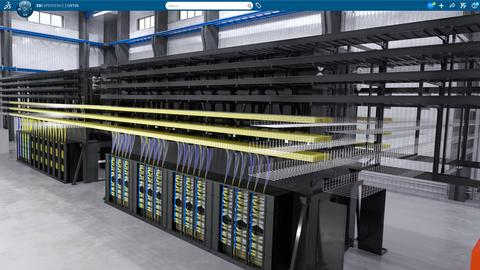
The collaboration extends Vertiv’s SmartRun configurable virtual twin approach to a broader range of AI factory infrastructure, including Vertiv OneCore, a modular data center solution integrating critical power, thermal management and supporting infrastructure.
Virtual Models Connect Infrastructure Systems
Under the collaboration, Vertiv’s pre-engineered power and cooling components will be represented as configurable digital models within Dassault Systèmes’ 3DEXPERIENCE environment.
Engineers can use these models to develop customer-specific configurations based on NVIDIA’s reference architecture, assess design alternatives and evaluate how changes affect different infrastructure systems. The platform also supports model-based systems engineering, multiphysics simulation and the generation of engineering deliverables from a shared environment.
Rather than treating power and cooling equipment as separate components, the approach models them as parts of an integrated system. This can help engineering teams identify constraints and assess system behavior before physical construction begins.
The companies also aim to maintain design consistency as a project moves from initial configuration through construction and commissioning. The same model-based approach could support subsequent modifications and technology upgrades, when new computing equipment may change a facility’s power and thermal requirements.
Vertiv’s OneCore solution is designed to integrate infrastructure elements into a coordinated deployment model. Combining it with virtual twin capabilities could help customers assess configurations earlier and reduce the amount of complex integration work required at the construction site.
Companies Project Faster Deployment
The companies estimate that the combined approach could accelerate the process from requirements to a configured and validated AI factory solution by up to 10 times and reduce the defined infrastructure deployment period by as much as 50%.
Vertiv’s modeling also indicates that the approach could bring computing capacity online approximately 10 weeks earlier than a modeled conventional deployment baseline. At the same installed capacity, that earlier readiness could generate up to 30% more cumulative token output during the first 12 months after project kickoff.
These figures are projections based on the assumptions in Vertiv’s model, not independently verified results from a customer deployment. The projected increase in token output comes from making capacity available earlier, rather than from improvements in the operating efficiency of the computing systems.
The distinction matters as AI infrastructure providers face pressure to shorten construction schedules while accommodating increasingly demanding computing workloads. Virtual validation can help identify design conflicts earlier, but actual deployment timelines will also depend on equipment availability, site readiness, permitting, construction and commissioning.
“The winners in AI will be those who can turn computing capacity into productive capacity fastest,” said Scott Armul, Vertiv’s chief product and technology officer. He said the collaboration is intended to reduce field complexity and help customers bring AI capacity online sooner.
Demonstration Planned at NVIDIA GTC Berlin
The companies plan to demonstrate elements of the approach at NVIDIA GTC Berlin, scheduled for October 20–22, 2026. The demonstration will show how facility requirements inform infrastructure configurations, how engineers can evaluate power and cooling constraints virtually, and how factory-built infrastructure can support physical deployment.
The demonstration will combine NVIDIA’s Vera Rubin DSX reference design and Omniverse DSX Blueprint with Dassault Systèmes’ engineering platform and Vertiv’s SimReady power and cooling assets.
Elisa Prisner, executive vice president of strategy, industry, marketing and transformation at Dassault Systèmes, said virtual twins can help engineering teams evaluate design decisions and validate an integrated system before physical infrastructure exists.