

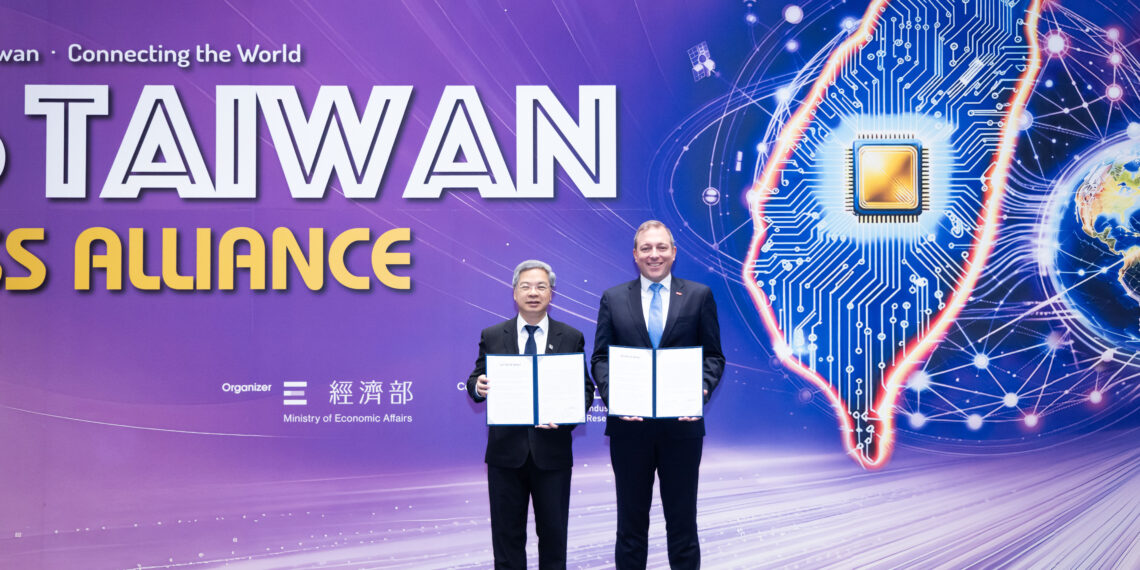
BASF (ETR: BAS) has signed a letter of intent with Taiwan’s Ministry of Economic Affairs to expand its semiconductor materials operations in Taoyuan, targeting demand from chipmakers developing processes below 2 nanometers.
The German chemicals group will expand production capacity, quality analysis capabilities and its Innovation Center at its Kuanyin site. The investment is intended to strengthen local supply, technical support and collaboration with semiconductor manufacturers.
BASF did not disclose the investment value, project timeline or additional production capacity.
The expansion comes as chipmakers advance toward smaller process nodes to support increasingly demanding computing applications, including artificial intelligence. These technologies require high-purity specialty chemicals and tightly controlled formulations to meet stringent manufacturing and quality requirements.
Taiwan site to support advanced chip production
The expanded Kuanyin facility will strengthen BASF’s manufacturing, quality assurance and technical service capabilities in Taiwan. The company expects the investment to improve supply reliability and enable closer cooperation with customers developing advanced semiconductor processes.
The expanded Innovation Center will support materials development and analytical work for next-generation manufacturing technologies. BASF also plans to work with industry partners on materials for future chip generations.
“Taiwan is a global hub for semiconductor innovation and manufacturing,” said Gops Pillay, president of BASF’s Global Operating Division.
BASF established the strategic base for its global Electronic Materials operations in Taiwan in 2025, reflecting the market’s importance to its semiconductor business, Pillay said.
Taiwan is a major centre for advanced chip manufacturing, supported by a network of semiconductor producers and suppliers. As production advances toward sub-2-nanometer processes, materials suppliers face tighter requirements for purity, consistency and compatibility with increasingly complex manufacturing steps.
Local production and testing capabilities can help suppliers respond to customer requirements and address process challenges more quickly.
BASF strengthens long-term semiconductor strategy
Jens Liebermann, senior vice president of BASF’s Global Electronic Materials business and chairman of BASF Taiwan, said the expansion would strengthen the company’s local manufacturing, innovation and technical services while supporting the development of materials for future semiconductor technologies.
BASF’s Electronic Materials business has operated in Taiwan for more than two decades. Its products include process chemicals and customized formulations for semiconductor and display manufacturing, as well as specialized metal systems for consumer electronics.
The investment builds on BASF’s existing presence in a market central to advanced chip production. Smaller process nodes increase the precision required in fabrication, placing greater demands on the materials used throughout manufacturing.
By expanding production, analytical capabilities and technical support at Kuanyin, BASF aims to bring its services closer to semiconductor customers and strengthen supply-chain resilience.
The company has not provided further details on when the expanded facilities will become operational.